Why I Told Olivia's Story in Little Bird Through Her Brother
Behind the book — Little Bird
Little Bird isn't told by Olivia, it's told by Jake, twelve years old, watching his sister come apart from three feet away and understanding almost none of it. I made that choice deliberately. But why choose someone who doesn’t understand what is happening as the point of view for the story?
There are two reasons.
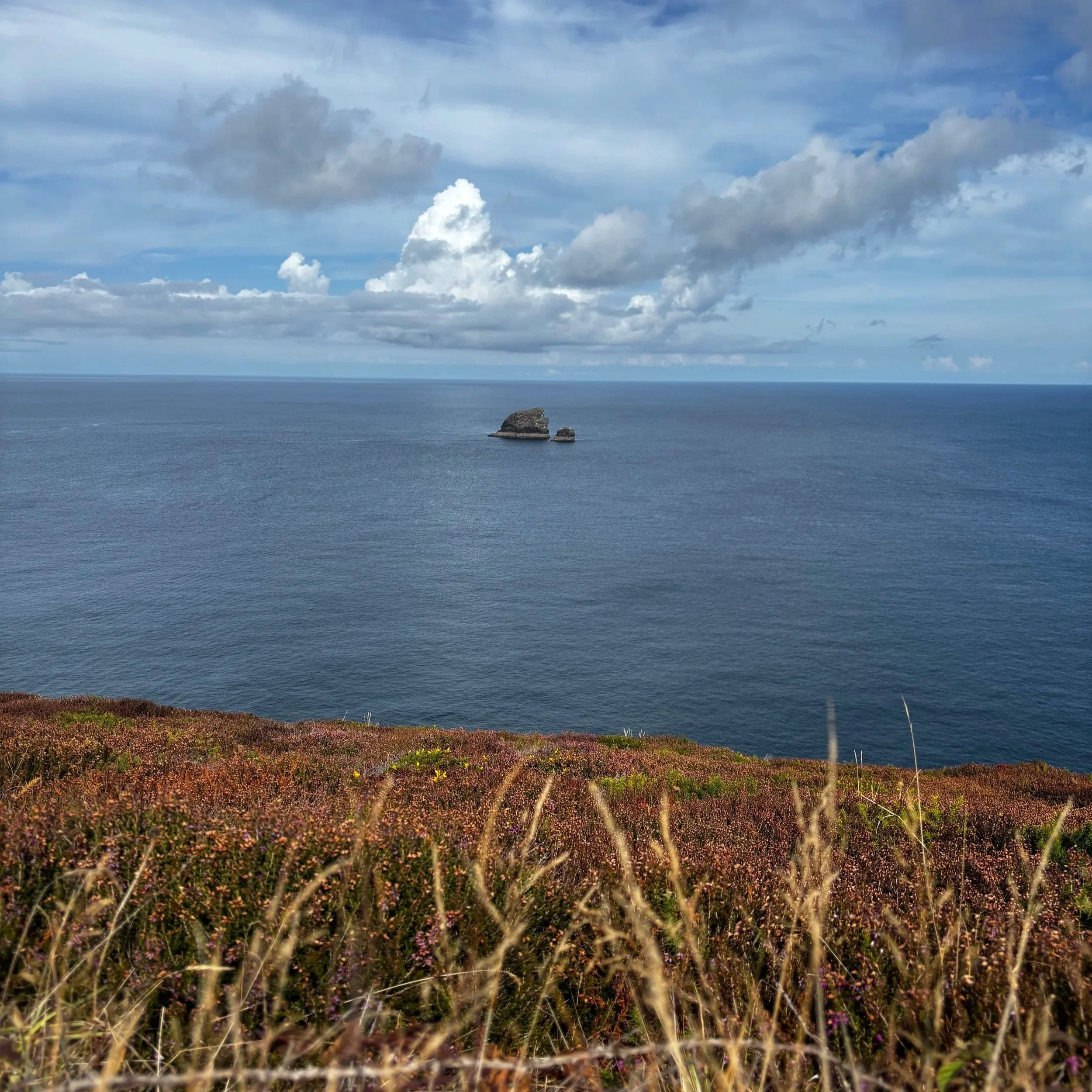
View of the Atlantic from St Agnes, Cornwall
Firstly, because that's what it's actually like for most families. The person at the centre of a crisis is very rarely the one telling you what's happening or explaining things clearly. Either because they can't yet, or because the people around them are too busy managing the practical wreckage to have space to ask.
When a family is in crisis, it is all about reactions. Trying to make decisions that cause the least harm. Trying to keep everyone functioning. Trying to find help.
It can be a deeply confusing and difficult time to navigate. Jake gave me permission to write confusion without resolving it. He doesn't get an explanation of what's happening with Olivia, not because I was withholding it from the reader for effect, but because in families like this, the explanation very often does arrive years later, if at all.
What Jake gets instead is proximity; the sound of a door through a wall, the specific quality of a silence at dinner, the way adults' faces do one thing and their voices do another. That's a child's actual evidence. It's also, I'd argue, closer to how most of us first encounter someone else's invisible experience: not through diagnosis, but through noticing.
Secondly, I wanted to write the invisible sibling.
This is a very real dynamic in families with one high needs child. And those families recognise this. I’m not writing this to shame anyone, but to let people know - I see you, it’s okay that this is what you’ve been dealing with. When one child is in crisis, but the other seems to be coping fine, it gives us permission to focus where the need is greatest. But something in our minds niggles that the other child also needs care and attention. So we do our best. That is all we can do.
I hear a version of Jake often in my therapy room; the sibling, the partner, the parent, sitting with the fallout of someone else's undiagnosed or unspoken differences. Everyone doing their best to make sense of behaviour they were never given the context for. Jake let me write that not-knowing and invisibility honestly, without making him wise beyond his years or turning him into a narrator who secretly understands more than a twelve-year-old plausibly could.
I wanted to explore the innocence of a young person seeing what was going on around them. And because of their simplicity, maybe seeing more than the rest of the family does.
The risk, of course, is that readers want Olivia's interiority and don't get it. I made that trade deliberately. I think there's already a lot of fiction that hands you a neurodivergent character's inner world on a plate, explained and legible. I wanted to write what it's like to love someone whose inner world you don't have access to, and to have to hold that not-knowing without it curdling into resentment. That felt like the truer, harder story — and the one closer to what actually happens in front rooms across the country, most evenings, with no one narrating it at all.
Little Bird is out now on e-book and paperback. You can buy your copy using the link below or order through your local bookshop.